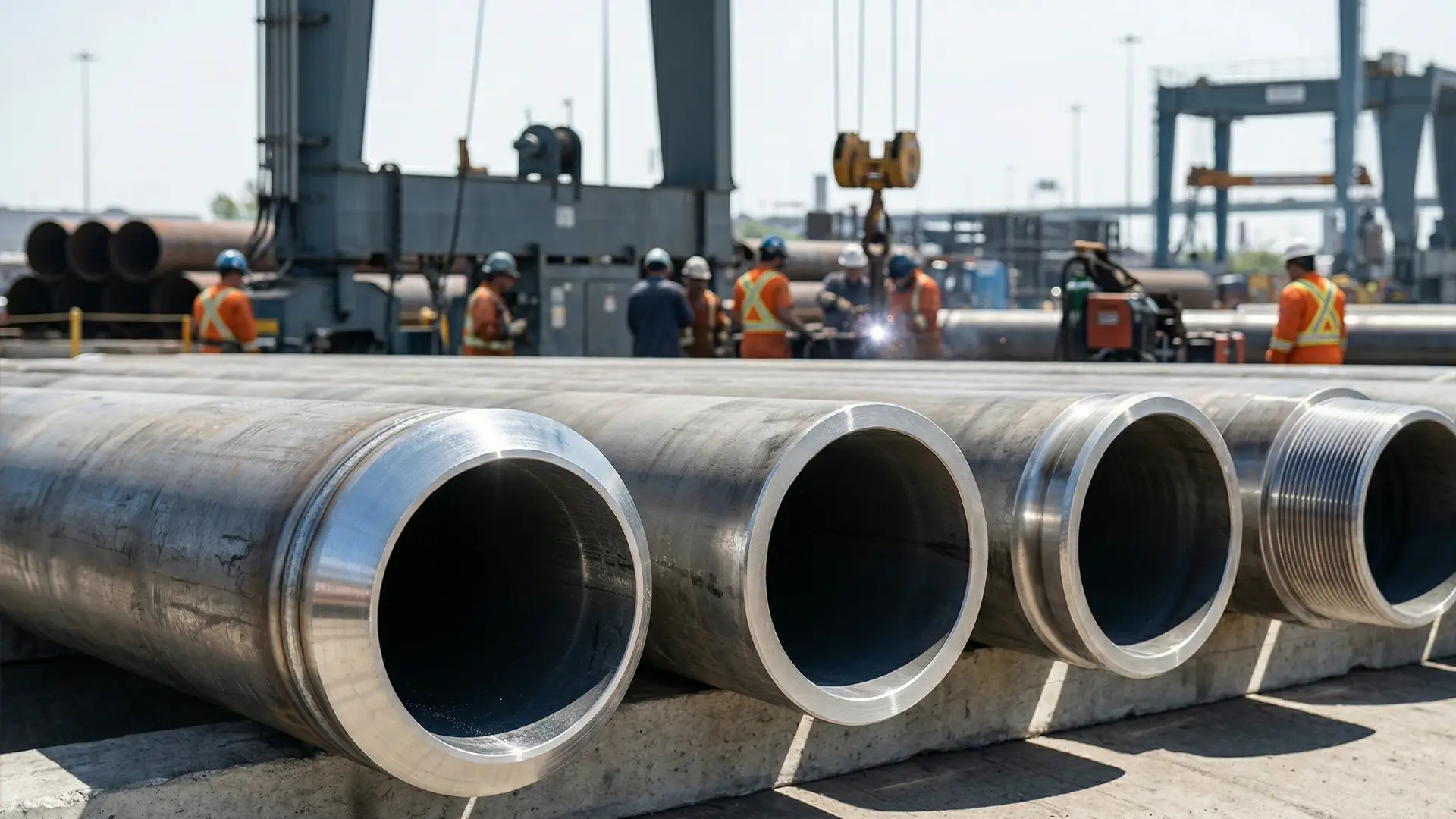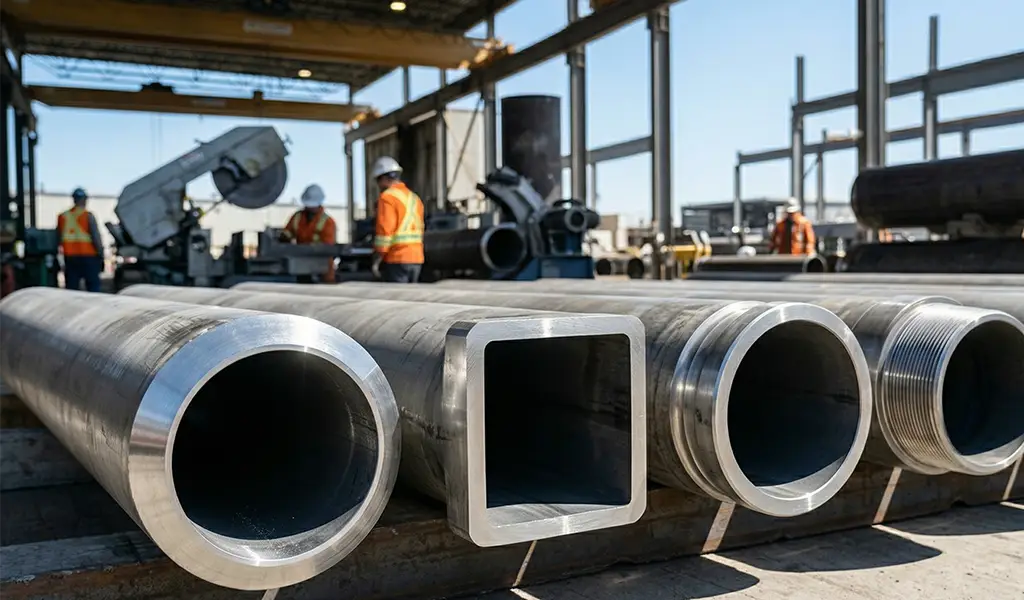
Specifying the correct outside diameter and wall thickness is only half the battle. Before steel pipe leaves the mill or fabrication yard, the ends must be properly prepared for how the pipe will be connected, welded, or driven on the job site.
The four most common types of pipe end preparations are Square Cut (Plain End), Beveled End, Threaded & Coupled (T&C), and Roll Grooved. Choosing the wrong end prep can lead to massive delays and expensive field-machining costs. Here is exactly how to specify your pipe ends based on your engineering application.
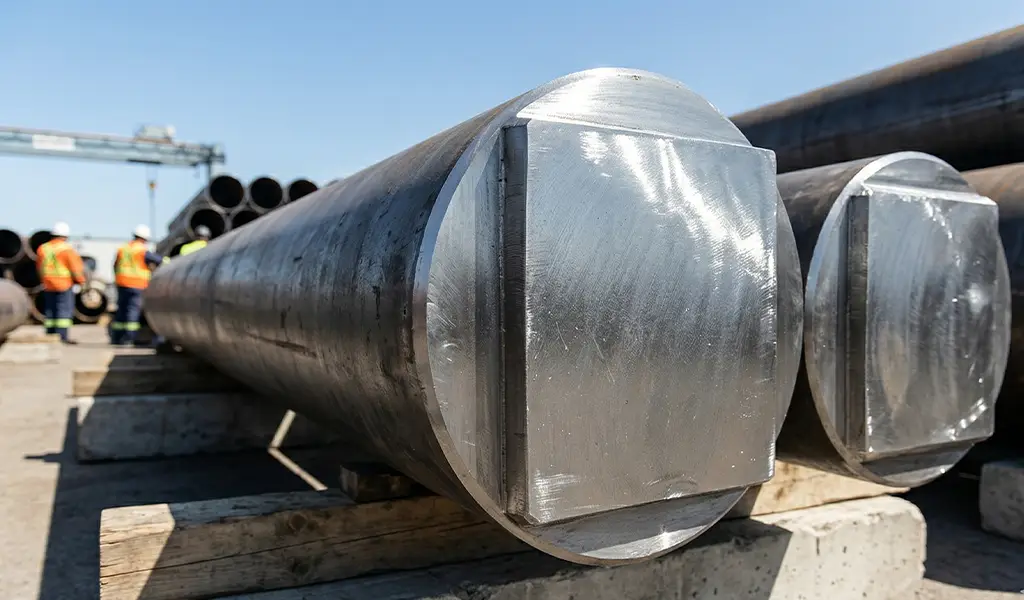
A Square Cut, often abbreviated as PE (Plain End), means the pipe has been cut at a perfect 90-degree angle to the run of the pipe. There is no bevel, thread, or groove applied. It is simply a flat, flush cut.
A Beveled End (BE) is specifically prepared for butt-welding. The edge of the pipe is machined or torch-cut at an angle (typically 30 degrees) to create a "V" shaped groove when two pieces of pipe are placed end-to-end. This allows the welding puddle to fully penetrate the wall thickness for a maximum-strength connection.
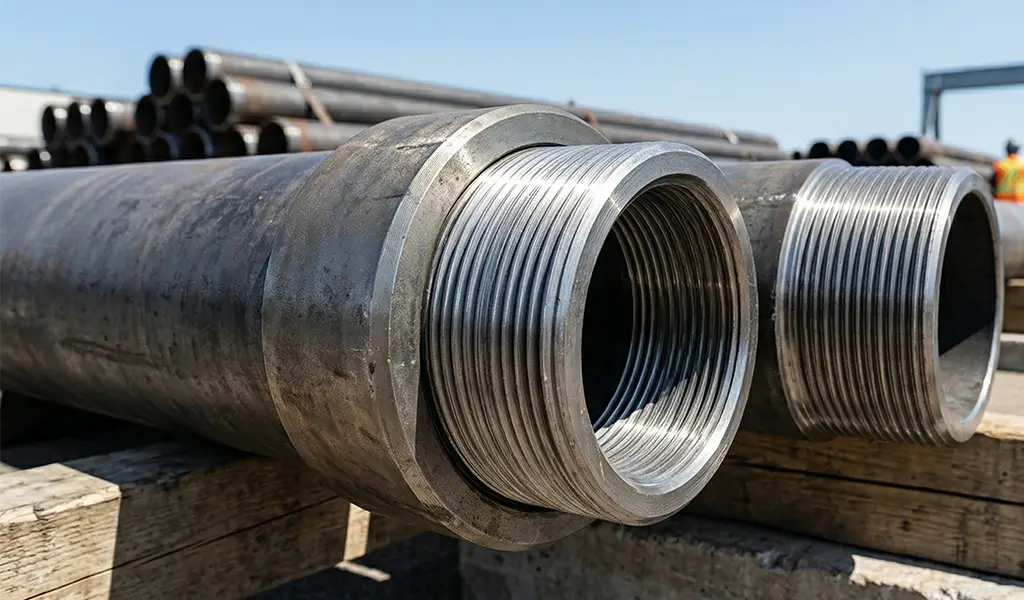
Threaded and Coupled pipe features tapered threads cut into the outside diameter of the pipe ends. One end is typically fitted with a steel coupling (a short, internally threaded sleeve), allowing the next joint of pipe to simply screw into place. This allows for quick assembly without the need for a welder.
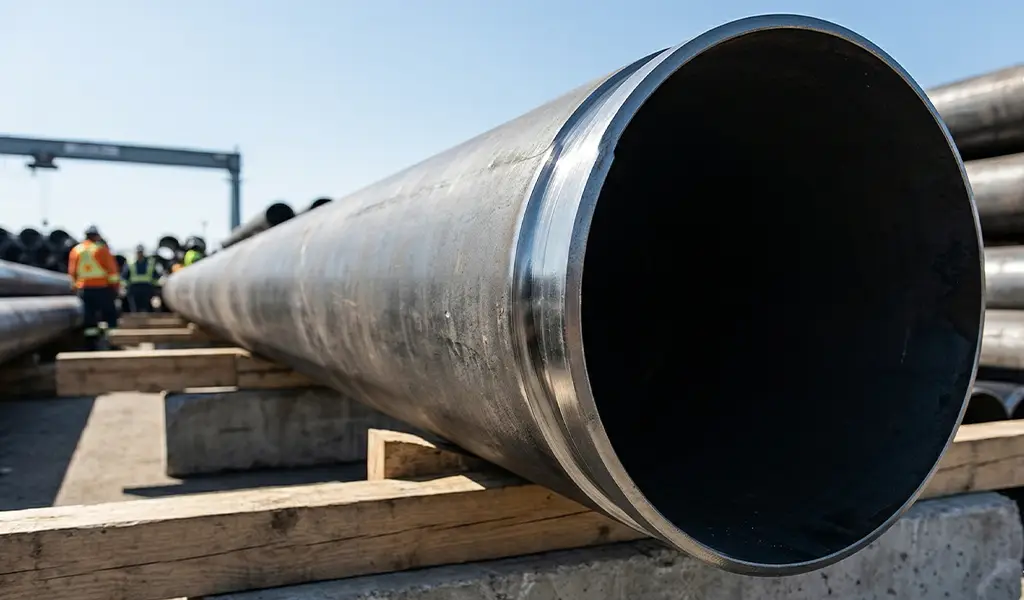
A grooved end has a continuous channel pressed (rolled) or machined (cut) near the edge of the pipe. Two grooved pipes are joined by placing a rubber gasket over the ends and bolting a mechanical coupling (such as a Victaulic fitting) into the grooves.
Whether you need precision beveling, custom threading, or exact square-cutting for your piling project, find the right fabrication partner today.
Don't have the equipment on site? Connect with yards that offer precision beveling, threading, and custom square-cutting.
View Fabrication ServicesCalculate exact weights for carbon steel pipe and HSS tubing.
Open Weight Calculator