
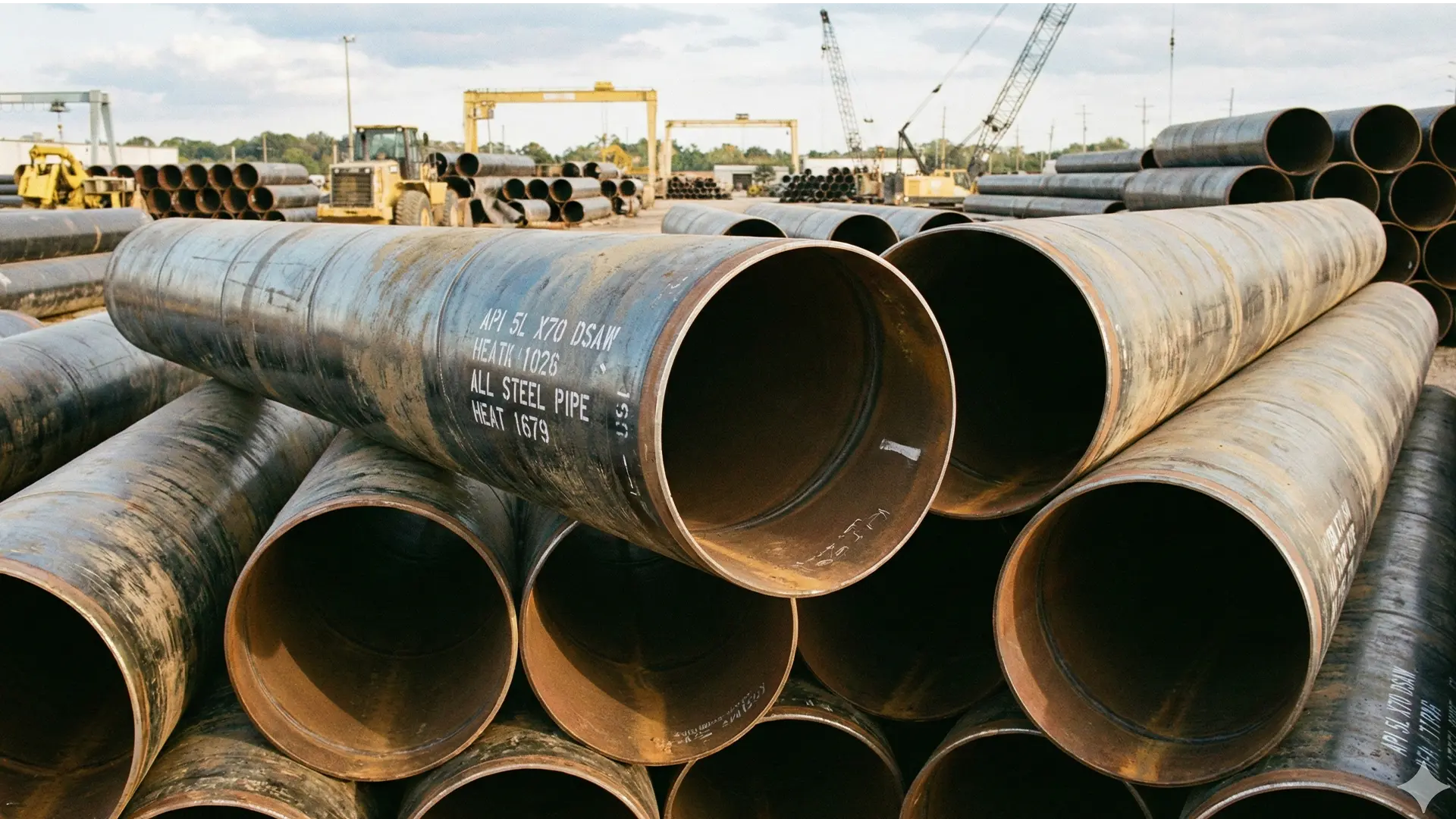
DSAW STEEL PIPE: WHAT IS IT? & SPECS
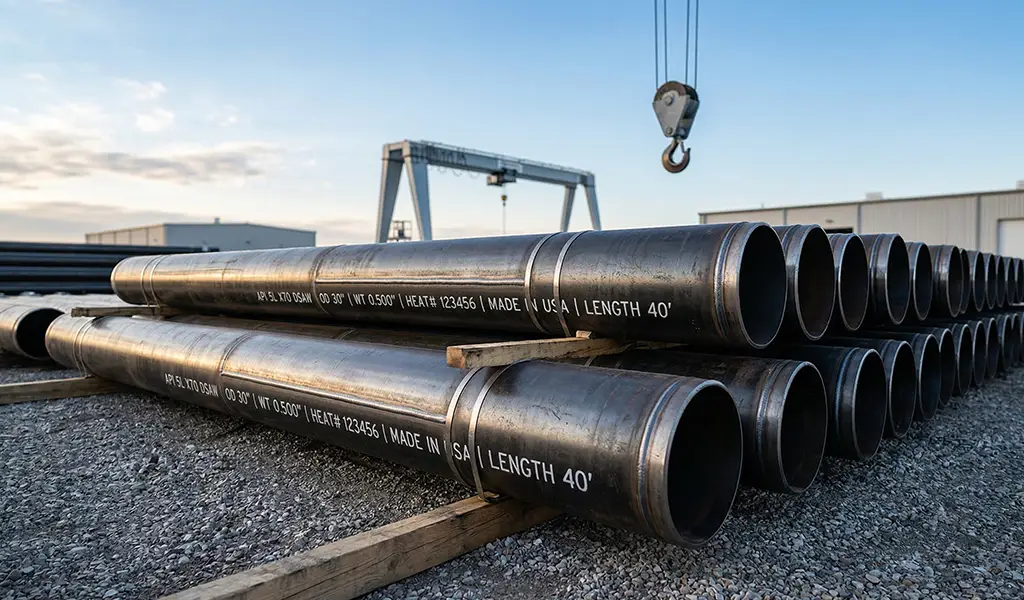
DSAW (Double Submerged Arc Welded) pipe is a straight-seam product manufactured from raw steel plates. Unlike ERW pipe, which is continuously rolled from coil, DSAW is formed by rolling single plates into cylinders and welding the longitudinal seam from both the inside and the outside, ensuring a high-strength, full-penetration joint.
The "Double Submerged" Advantage
The term "Double" refers to the welding passes—once from the inside, and once from the outside. "Submerged" means the welding arc is completely buried under a blanket of granular flux. This protects the molten weld pool from atmospheric contamination (oxygen/nitrogen) and prevents sparks and spatter, resulting in an incredibly pure, high-penetration weld.
The U-O-E Manufacturing Process
The production of DSAW pipe typically follows the "U-O-E" method, which refers to the three stages of forming the heavy steel plate using massive hydraulic presses:
U-ing Press
The flat steel plate is crimped and pressed into a U-shape.
O-ing Press
The U-shape is crushed closed into an O-shape (cylinder) and tack-welded.
Expansion
The pipe is mechanically expanded from the inside to meet exact diameter tolerances.
The Two Types of DSAW Pipe
When buyers specify DSAW, they are usually referring to the welding method. However, DSAW comes in two distinct forms depending on the seam layout:
-
1. LSAW (Longitudinal Submerged Arc Welded)
Manufactured with a single, straight seam running down the length of the pipe (created via the U-O-E process). It is the gold standard for offshore oil rigs and extreme high-pressure lines. Learn more about LSAW.
-
2. SSAW / HSAW (Spiral Submerged Arc Welded)
Manufactured from hot-rolled steel coils, featuring a helical (spiral) seam. It is highly cost-effective for large diameters and is widely used for water transmission and deep foundation piling. Compare SSAW vs. LSAW.
Key Specifications & Applications
| Feature | Details |
|---|---|
| Size Range | Typically 18.00” O.D. through 60.00” O.D. |
| Length | Single and Double Random lengths up to 60 ft. |
| Grades | API 5L (Grade B through X70), ASTM A252 (Grades 2 & 3), A572 |
| Conditions | New, Surplus, Mill Reject, and Used |
Due to its massive diameter and structural integrity, DSAW pipe is the preferred choice for:
- 🛢️
High Pressure PipelinesOil and gas transmission lines requiring thick walls.
- 🏗️
Structural Piling & ColumnsHeavy support for bridges, marine docks, and offshore platforms.
- 🛣️
Road Casing & Sign PolesProtecting utility lines under highways and supporting massive billboards.
DSAW Technical FAQ
Common questions regarding the manufacturing and inspection of Double Submerged Arc Welded pipe.
Looking for DSAW Pipe Inventory?
Connect with our network of verified heavy-wall pipe distributors and rolling mills to source your exact specifications.
View Pipe Distributors