
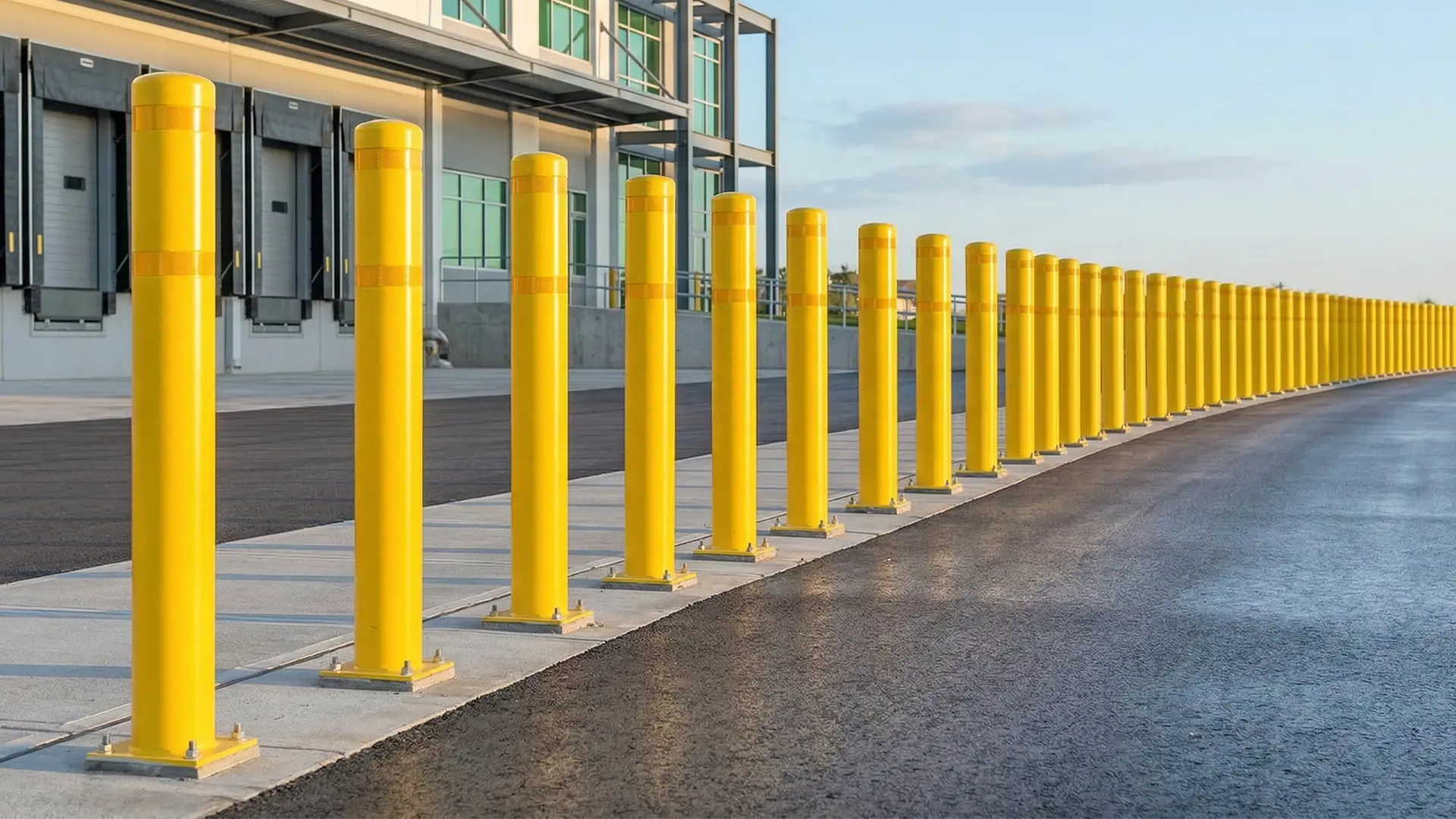
The Silent Sentinel. Pipe bollards are the standard solution for protecting storefronts, gas pumps, and utility meters from vehicle collisions. Because they are designed to be filled with concrete, the steel acts as a "form" or "skin," meaning the cosmetic condition of the steel is often irrelevant to its final function.
Pro Tip: Buy Secondary Pipe
Since 90% of bollards are painted or covered with plastic sleeves, you do not need expensive prime pipe. Sourcing "Secondary," "Surplus," or "Reject" pipe can save you 20-40% on material costs. These grades maintain the necessary structural strength but may have minor cosmetic imperfections or lack mill certs.
Standard Sizes
| Nominal Diameter | Outer Diameter (OD) | Common Application |
|---|---|---|
| 4" Pipe | 4.500" | Interior warehouse racking, door frame protection, residential driveways. |
| 6" Pipe | 6.625" | The Industry Standard. Storefronts, bank drive-thrus, gas stations. |
| 8" Pipe | 8.625" | Heavy Industrial. Loading docks, truck stops, and propane tanks. |
Installation Guide (Deep Embedment)
Proper installation is critical for impact resistance. A standard surface-mounted bollard offers almost no protection against a moving vehicle; deep embedment is required.
Step 1
The Depth Rule
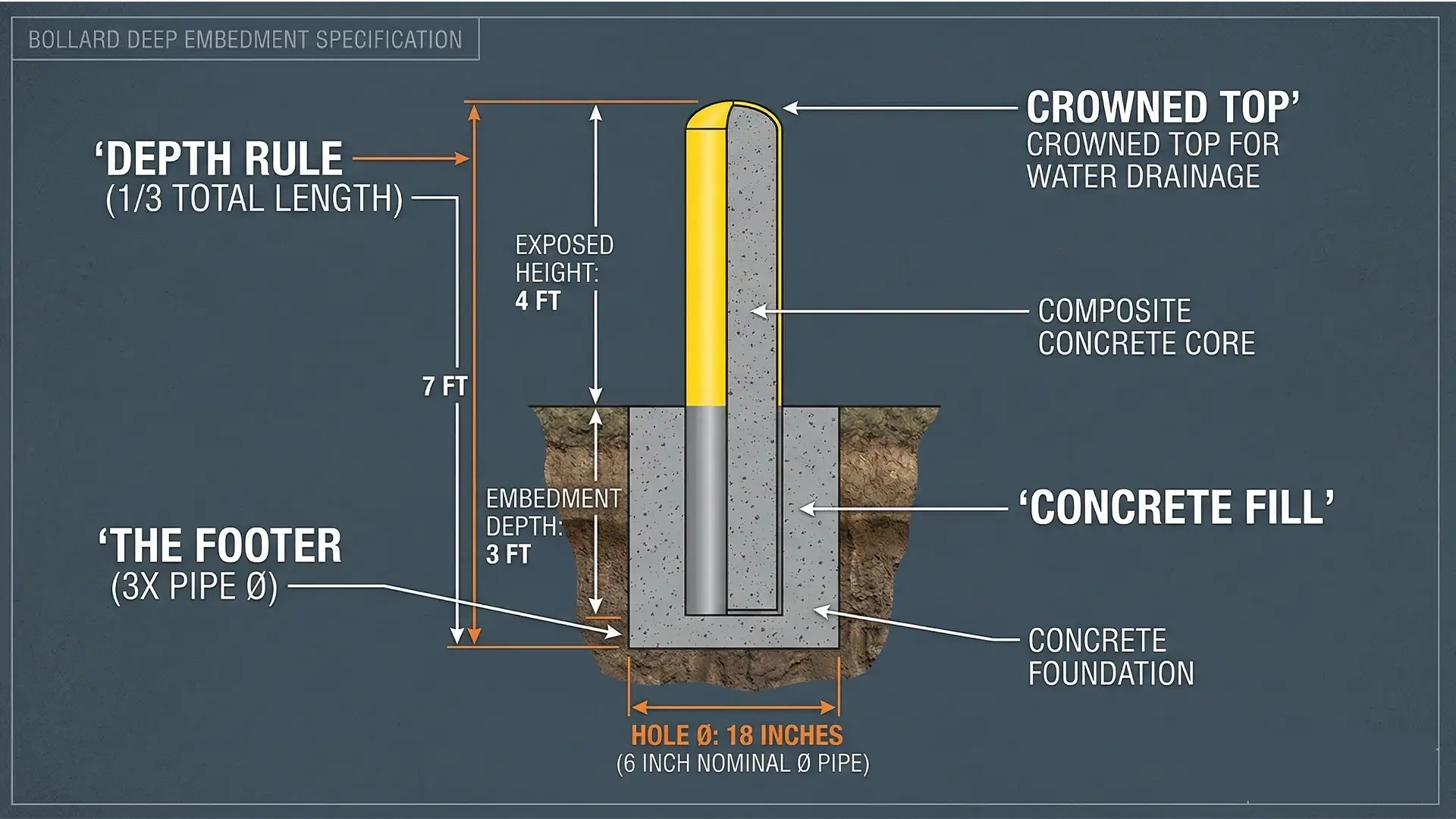
A bollard should be buried at least 1/3 of its total length. For example, if you require a 42" exposed height, utilize a 7-foot pipe (buried 3 feet, exposed 4 feet).
Step 2
The Footer
Dig a hole that is three times (3x) the outer diameter of the pipe. Center the pipe bollard precisely within the hole.
Step 3
Concrete Fill
Fill the hole with concrete to lock the base. crucially, fill the entire inside of the pipe with concrete to create a solid composite barrier.
Step 4
Crowning
Use a trowel to round off (or "crown") the wet concrete at the top of the pipe. This allows water to run off and prevents internal pooling and rust.
Technical Disclaimer
The installation guidelines provided here are for general informational purposes only. Local soil conditions, specific vehicle threats, and project requirements vary drastically. All Steel Pipe does not guarantee specific impact ratings for any installation. It is the sole responsibility of the contractor or owner to consult with a structural engineer and adhere to local building codes for final bollard specification and installation methods.
Bollard FAQ
Safety Products
Need Secondary Pipe?
Bollard contractors save massive costs by utilizing secondary or reject pipe. Connect with master distributors holding inventory.
Find distributorsPipe Weights
Ensure your freight quotes are accurate. Calculate the theoretical weight for your bollard order.
Weight Calculator