
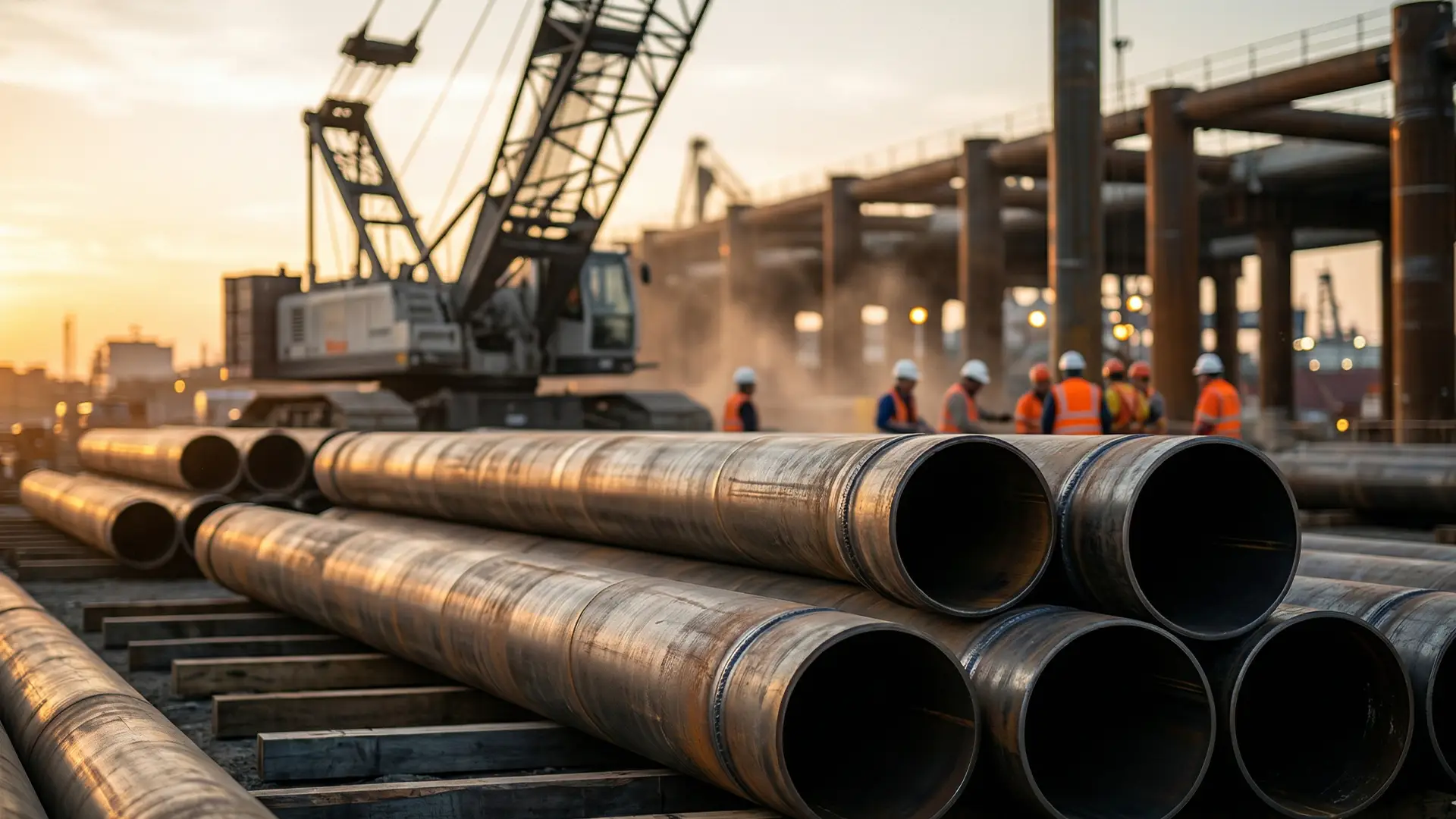
WHAT IS STRUCTURAL PIPE?
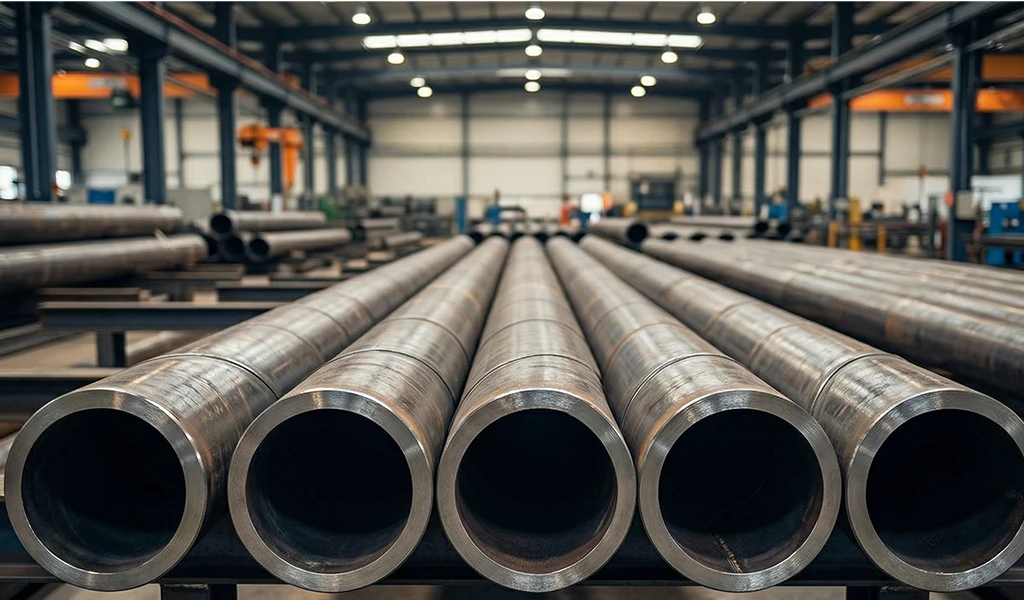
In the steel industry, structural pipe refers to carbon steel pipe that is engineered and utilized for load-bearing, mechanical, and structural applications rather than for the transportation of high-pressure fluids or gases.
While standard line pipe (like API 5L) is hydro-tested to ensure it won't leak under pressure, structural pipe prioritizes yield strength, tensile strength, and column integrity. It is the backbone of heavy civil engineering, acting as the foundation for bridges, buildings, and marine infrastructure.
What is Structural Pipe Used For?
Because it is highly versatile and incredibly strong, structural pipe is found on almost every major commercial construction site in North America. Its primary applications include:
🏗️ Deep Foundation Piling
Driven into the earth to transfer heavy structural loads into deep, solid soil layers. Commonly ordered to ASTM A252 specifications.
Find Piling Suppliers ›🚧 Bollards & Security
Concrete-filled steel pipes used to protect buildings, gas meters, and pedestrian walkways from vehicle impacts.
Find Bollard Suppliers ›🚇 Casing & Road Boring
Used to protect underground utility lines, water mains, and fiber optics when boring under highways or railroads.
View Casing Specs ›🏗️ Structural Columns
Used as exposed architectural columns, sign poles, and heavy framing for structural steel buildings.
View Structural Pipe ›How Big Can Structural Pipe Be?
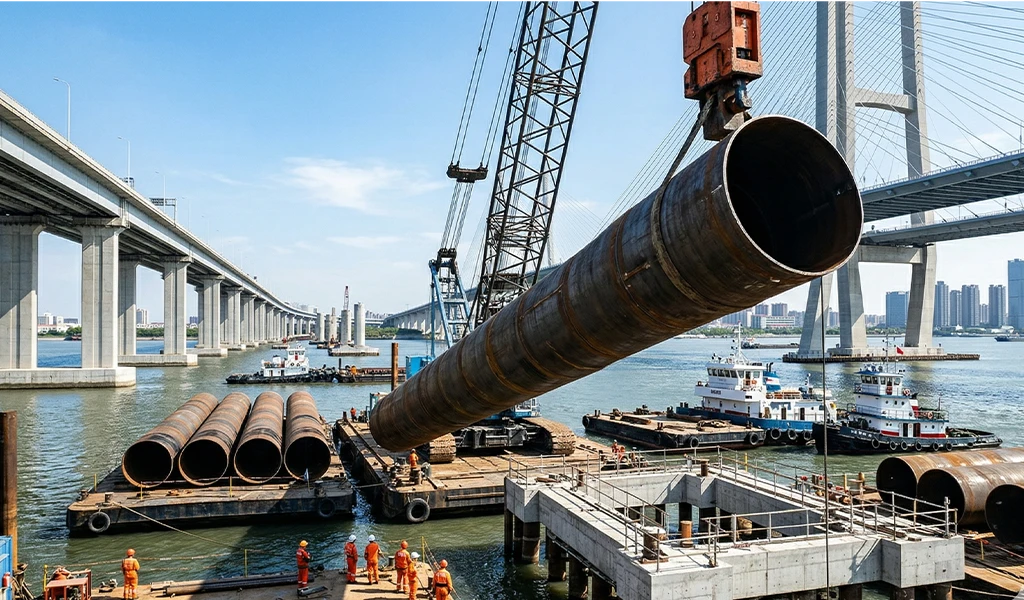
The dimensional range of structural pipe is massive. Depending on the manufacturing method, it can range from small handrails to massive caissons used in bridge construction.
- Outside Diameter (OD)Structural pipe is commonly available from as small as 1/2" NPS (for fencing and handrails) all the way up to 120" OD or larger (for massive marine caissons and heavy civil projects).
- Wall ThicknessWall thicknesses typically start at standard schedules (like Sch 40) but can exceed 2.000" thick for extreme heavy-wall structural demands.
- Standard LengthsMost standard structural pipe is sold in 21-foot or 42-foot lengths. However, large diameter spiral and DSAW pipe can be custom-cut to 80 feet or more to reduce splicing on the job site.
Manufacturing Methods
Not all structural pipe is made the same way. The required diameter, wall thickness, and budget will dictate which manufacturing process is used. Explore the major types below:
ERW (Electric Resistance Welded)
The most common method for pipe under 24" OD. Highly efficient and cost-effective.HSAW / Spiral Pipe
Helically welded from steel coils. The industry standard for large diameter piling.DSAW (Double Submerged Arc Welded)
Rolled from heavy plates with a straight seam. Used for thick-wall, large OD applications.Seamless Pipe
Extruded without a weld seam. Ideal for extreme structural loads and machining.Find Pipe Suppliers
Connect with structural pipe distributors carrying A252 piling, casing, and surplus inventory.
Search Directory