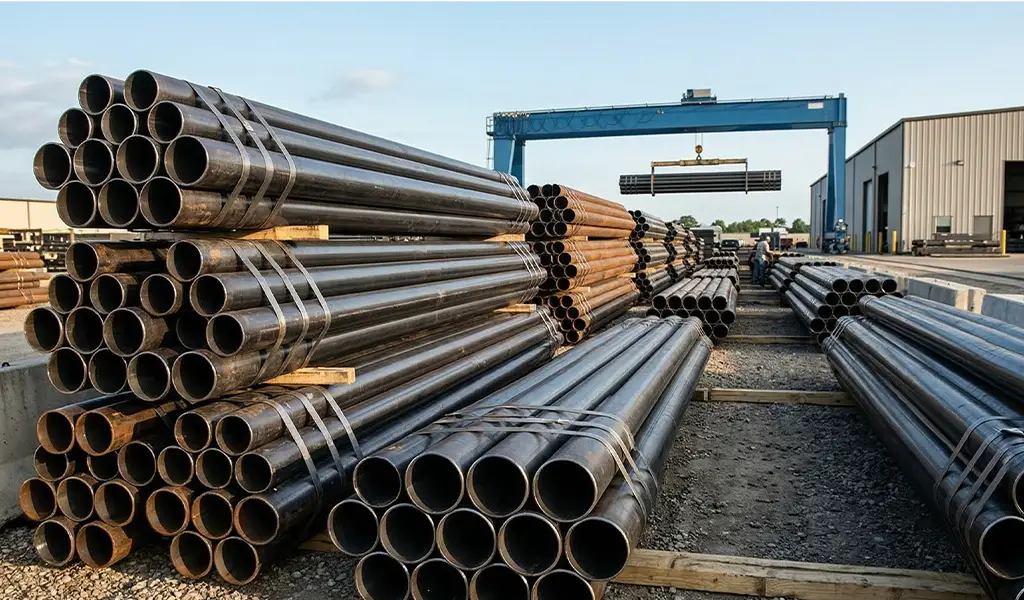
ERW (Electric Resistance Welded) pipe is manufactured by cold-forming a flat steel strip (coil) into a rounded tube and passing it through a series of forming rollers to obtain a longitudinal seam. The two edges are then simultaneously heated with a high-frequency current and squeezed together to form a bond.
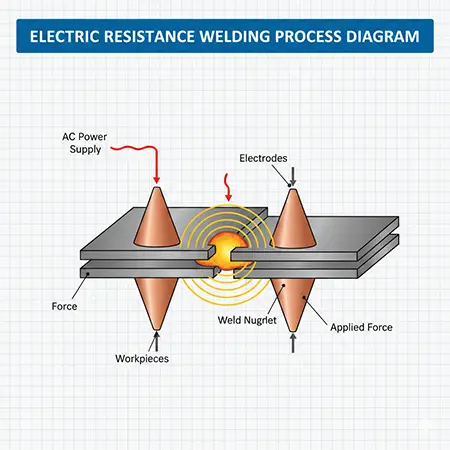
While ERW is the base manufacturing method, post-processing can significantly alter the mechanical properties of the tubing.
Welded pipe is categorized based on its end-use and specific manufacturing nuances. Below are the most common industry designations:
Standard carbon steel pipe used for low-pressure fluid conveyance (water, steam, gas) and structural fencing.
General steel pipe that has been hot-dipped in zinc to improve corrosion resistance for outdoor or wet applications.
Thin-walled welded carbon steel tube used in construction to protect electrical wiring in concrete and wall structures.
Small diameter pipes specifically designed for blowing oxygen into the melt during the steelmaking process.
Precision welded tube used for conveyor belt rollers and material handling systems.
Used for radiator cooling pipes in electrical transformers and heat exchangers. Typically made from ordinary carbon steel.
Calculate weights and dimensions for ERW, DSAW, and Seamless pipe.
Open Weight Calculator
