
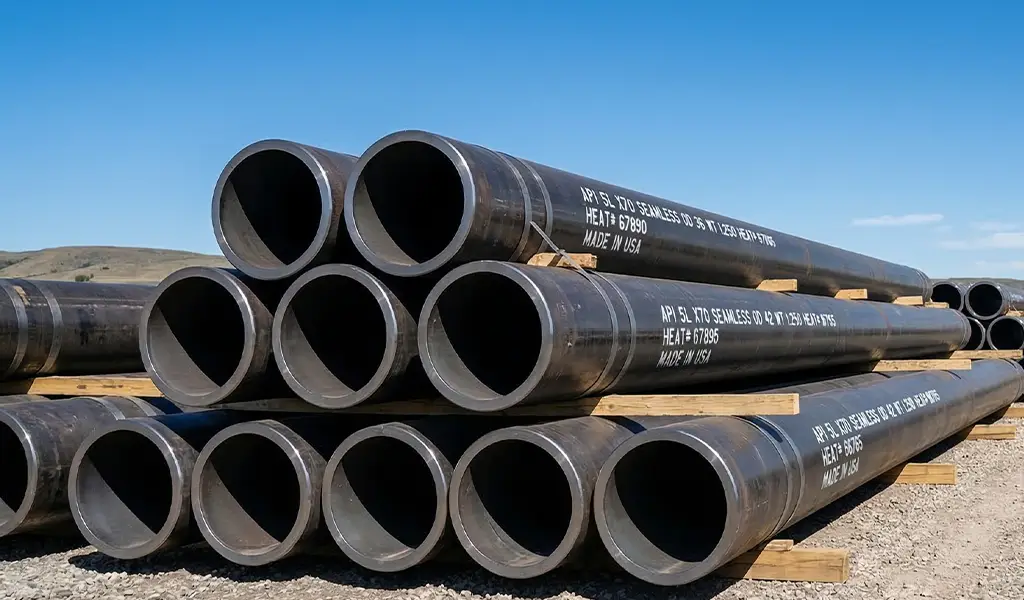
In the heavy industrial sector, the choice between "seamless" and "welded" is rarely about cost—it is about risk management. For critical systems, seamless pipe remains the gold standard because it eliminates the single greatest point of failure in a pressure system: the longitudinal weld seam.
While modern welding techniques have improved significantly, the manufacturing process for seamless pipe creates a homogeneous steel structure that can handle higher internal pressures and more extreme temperature fluctuations than its welded counterparts. At All Steel Pipe, we focus on the two workhorse specifications of the carbon steel world: ASTM A106 and ASTM A53.
What is Seamless Pipe?
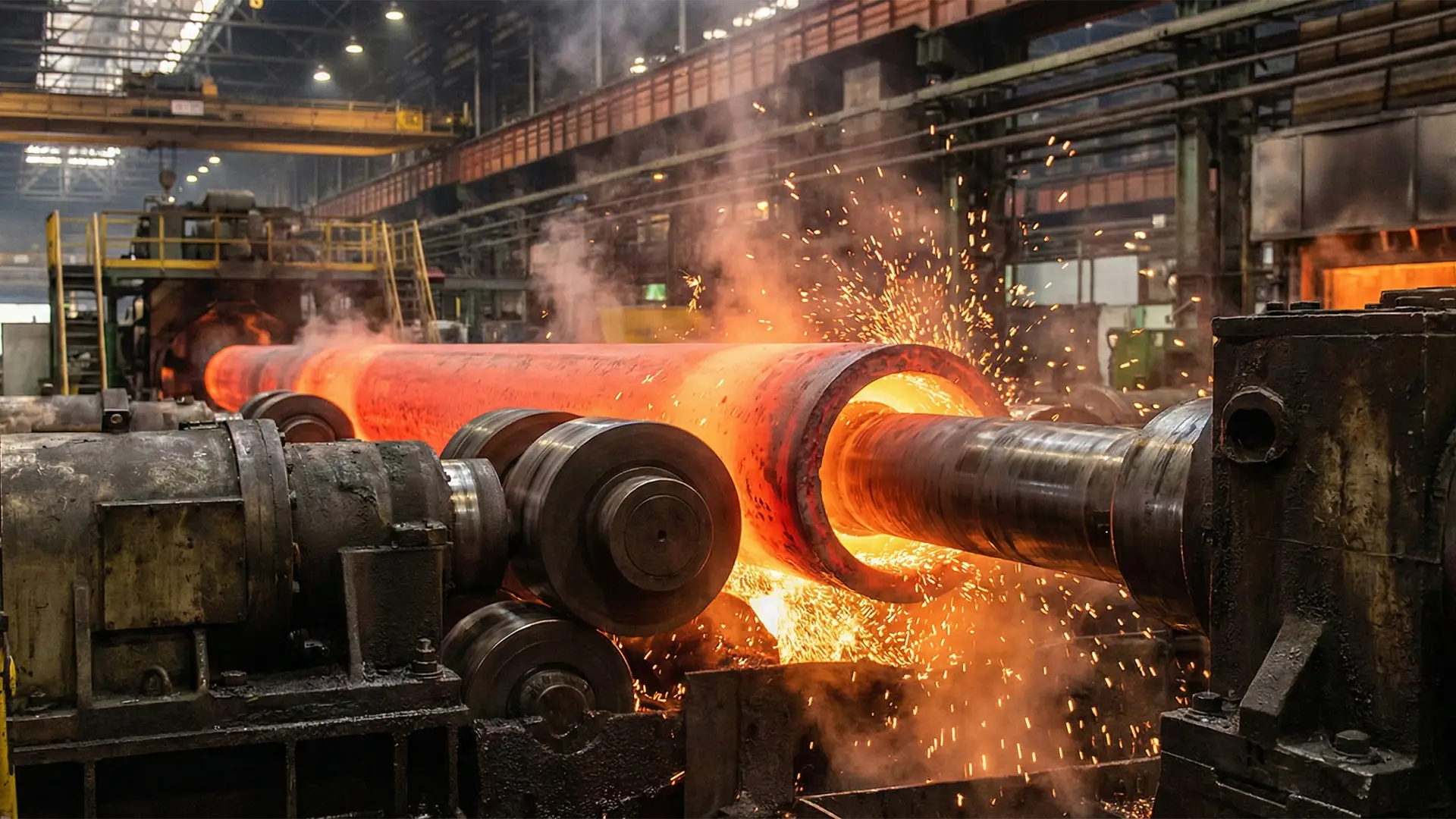
At its core, seamless pipe (SMLS) is a tubular product manufactured without a longitudinal weld seam. Unlike ERW or DSAW pipe, which are formed by rolling and welding flat steel plates or coils, seamless pipe begins as a solid, cylindrical block of steel known as a billet.
This billet is heated to extreme temperatures and stretched or pushed over a piercing mandrel to create a hollow tube. Because the resulting pipe is formed from a single, continuous piece of steel, it possesses a completely homogeneous microstructure. This lack of a weld seam eliminates the most common point of vulnerability in pressure piping systems, allowing the pipe to withstand significantly higher pressure ratings, corrosive environments, and mechanical stress.
1. The Silicon Difference: ASTM A106
ASTM A106 is strictly a seamless specification. If you see a pipe labeled A106, you know it was created via a mandrel mill or extrusion process. It is specifically engineered for "High-Temperature Service."
The "secret sauce" in A106 is Silicon. According to the code, A106 Grade B must have a minimum silicon content of 0.10%. This silicon acts as a "killing agent" during the steel-making process, removing oxygen from the molten metal. This creates a "killed steel" that is far more resistant to the grain degradation and brittleness that occurs when carbon steel is exposed to temperatures exceeding 750°F (399°C).
2. The Utility Standard: ASTM A53
Conversely, ASTM A53 is a general-purpose utility specification. It covers both seamless and welded (ERW) manufacturing. While it is incredibly common for steam, water, and gas lines, it lacks the silicon requirements of A106. In high-heat applications, A53 is more prone to graphitization—a process where the carbon in the steel turns into graphite flakes, making the pipe brittle and prone to catastrophic failure.
| Feature | ASTM A106 (Grade B) | ASTM A53 (Grade B) |
|---|---|---|
| Process | Seamless Only | Seamless or Welded |
| Silicon Content | 0.10% Min (Killed Steel) | Not Required |
| Max Temperature | Up to 750°F+ | Ambient / Low Temp |
| Joint Efficiency | 1.0 (100%) | 1.0 (SMLS) / 0.85 (Welded) |
3. The 1.0 Efficiency Factor
From an engineering perspective, the most compelling reason to specify seamless pipe is the **Joint Efficiency Factor (E)**. According to ASME B31.3 pressure piping codes, a seamless pipe is given a value of 1.0. This means the pipe wall is considered 100% efficient across its entire circumference.
Welded pipes are often derated to 0.85 to account for the heat-affected zone (HAZ) created during the welding process. For an estimator, this means you can often specify a thinner wall (lighter schedule) of seamless pipe to achieve the same pressure rating as a thicker, heavier welded pipe, potentially saving thousands in freight and installation labor.
4. Testing & Verification
High-pressure pipe is only as good as its mill test report (MTR). Every length of seamless pipe we supply undergoes rigorous testing at the mill:
- Hydrostatic Testing: The pipe is filled with water and pressurized to a specific level (often 2,500 PSI or more) to ensure there are no microscopic leaks or wall defects.
- NDT (Non-Destructive Testing): Using ultrasonic or eddy current sensors to "see" through the steel and detect internal inclusions or cracks.
- Flattening & Bending: Grade A pipe is often specified over Grade B if the project requires the pipe to be coiled or bent, as Grade A has better ductility.
Looking for Corrosive Service Solutions?
While A106/A53 are carbon standards, the governing specification for seamless stainless steel is ASTM A312. For pharmaceutical, food-grade, or marine applications, visit our Stainless Steel Pipe Hub.