
HOW TO READ A MILL TEST REPORT (MTR)
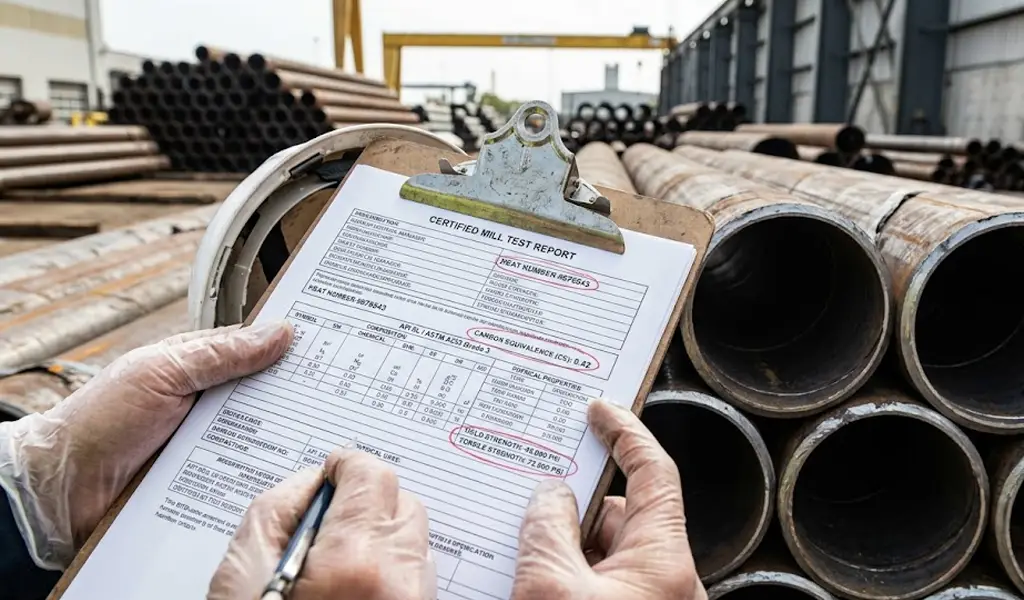
A Mill Test Report (MTR), also known as a Certified Mill Test Report (CMTR) or Metallurgical Test Report, is a quality assurance document generated by the steel mill. It certifies that the chemical and physical properties of the steel pipe meet the exact specifications ordered by the purchaser.
In the heavy structural and energy sectors, an MTR is effectively a legally binding birth certificate for your steel. Without it, a piece of pipe is considered "unidentified" and cannot be used in regulated applications like API line pipe or DOT bridge piling. Here is exactly how to read and verify the three main sections of an MTR.
1. The Heat Number & Identification
The top section of the MTR contains the basic pedigree of the material. The most critical piece of data here is the Heat Number.
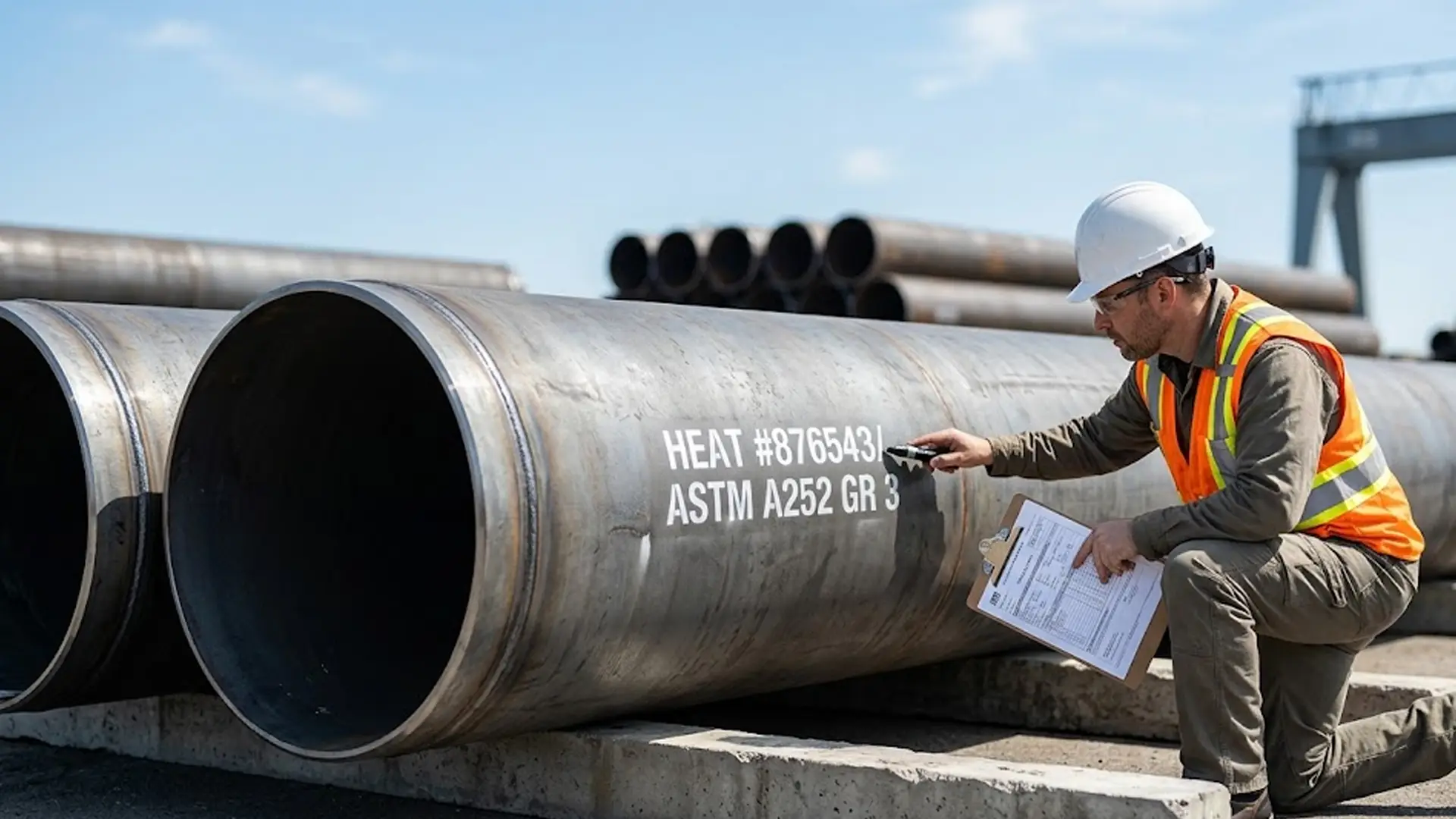
- Heat Number: A unique identification sequence stamped or stenciled onto the pipe itself. A "Heat" refers to a single batch of molten steel. You must verify that the heat number stenciled on the physical pipe exactly matches the number on the MTR.
- Specifications Met: This will list the standards the pipe was tested against, such as ASTM A252, ASTM A500, or API 5L.
- Dimensions: Confirms the Outside Diameter (OD), Wall Thickness (WT), and Length.
2. Chemical Composition
This section proves what elements were melted down to create the steel. Every ASTM and API specification has strict maximum (and sometimes minimum) allowable limits for specific elements.
Key Elements to Check:
- Carbon (C): Gives steel its strength, but too much makes it brittle.
- Manganese (Mn): Increases toughness and tensile strength.
- Sulfur (S) & Phosphorus (P): These are generally considered impurities; high levels cause cracking and weakness.
3. Mechanical Properties
While the chemical section shows what the steel is made of, the mechanical section proves what the steel can do. The mill physically pulls, bends, and flattens test samples from the heat to record these numbers.
- Yield Strength (PSI or MPa): The exact point at which the steel will begin to permanently deform or bend under stress. For example, ASTM A252 Grade 3 requires a minimum yield of 45,000 PSI.
- Tensile Strength (PSI or MPa): The ultimate breaking point. This is the maximum amount of stress the steel can handle before it completely fractures or snaps.
- Elongation (%): Measures the steel's ductility. It shows how much the steel stretched before it broke during the tensile test.
Need Fully Certified Material?
Every piece of Prime pipe listed by our distributor network comes with complete, traceable Mill Test Reports. Find your supplier today.
Deep Dive: Pipe Manufacturing Methods
Now that you know you need steel pipe instead of tubing, the next step is determining how that pipe should be manufactured based on your pressure and structural requirements. Explore our technical guides below:
Need to Source Material?
Browse our supplier directories based on your exact engineering requirements.
Find Verified Suppliers
Connect with master distributors supplying domestic and import pipe with fully traceable MTRs.
View DistributorsRelated Resources
Check Your Weights
Calculate exact weights for carbon steel pipe and HSS tubing.
Open Weight Calculator