
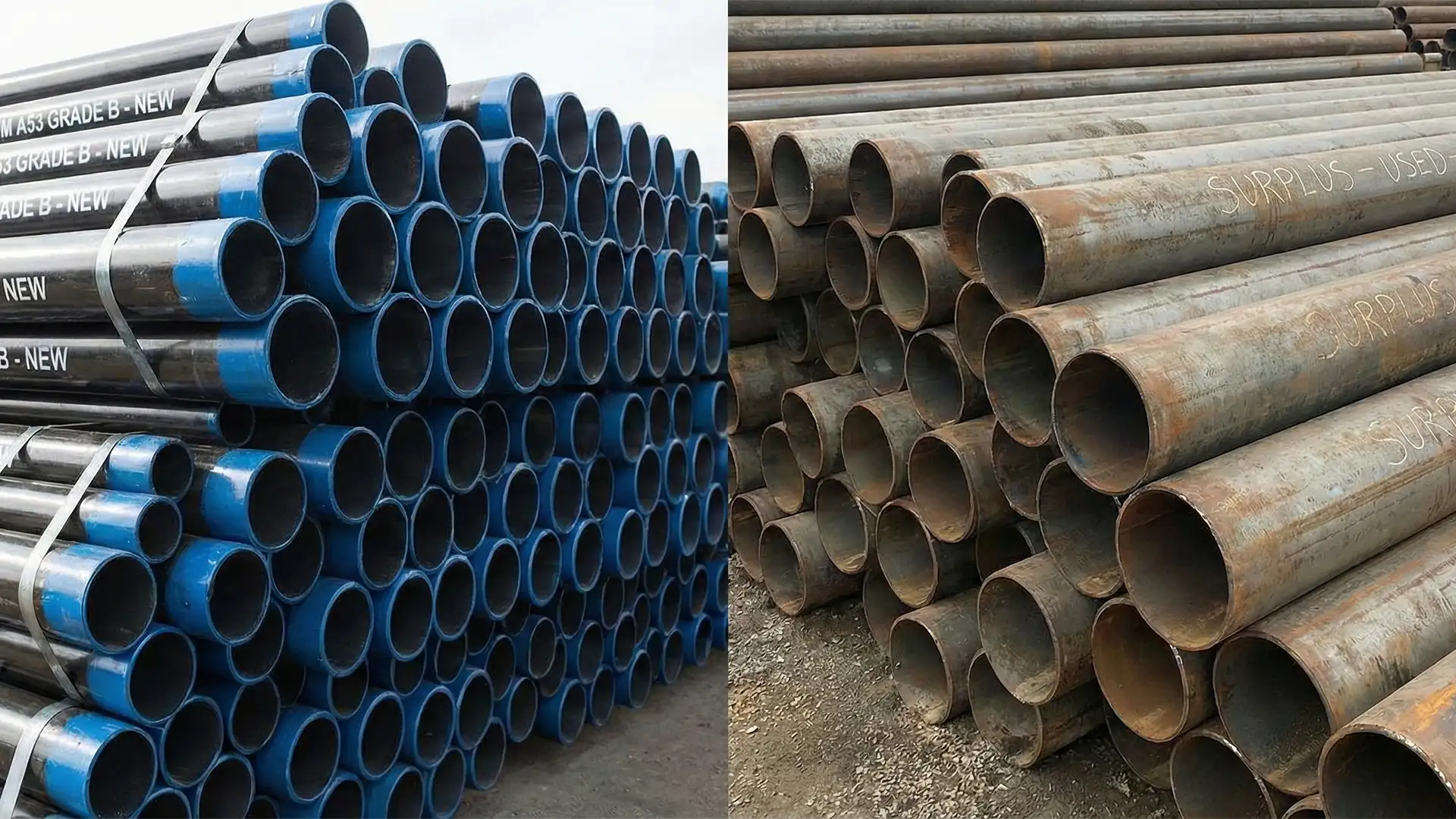
In the steel pipe industry, the price difference between "Prime" material and "Surplus" or "Secondary" material can exceed 30%. Many contractors search for used pipe for sale to increase their margins—but you must understand the structural risks before making a purchase.
Defining the Terms
Before deciding which to buy, you must understand what you are actually getting.
1. Prime (New)
- Backed by Mill Test Reports (MTRs).
- Guaranteed to meet a specific spec (e.g., ASTM A500 Grade B).
- Visually perfect; stenciled, coated, clean ends.
- Cost: High
2. Surplus / Secondary
- Sold "As-Is." No MTRs or warranty.
- Often rejected by the mill for minor flaws (weld height, wall variance, chemistry miss).
- May have rust, dents, or missing coatings.
- Cost: Low
The Golden Rule of Steel
⚠️ Pressure vs. Structure
Never use surplus or secondary pipe for pressure applications (oil, gas, steam, compressed air). If it must hold pressure, you MUST buy Prime pipe with MTRs.
Surplus pipe is generally safe only for structural applications (load bearing, fencing, piling) where leaks are not a life-safety issue.
Sourcing Strategies
Finding the right surplus material often depends on your location and the specific diameter you need. Freight costs can often ruin the savings on used material, so strategy is key.
- Locality Matters: Because shipping steel is heavy and expensive, we often see customers searching for used steel tubing for sale near me rather than national suppliers. We recommend sourcing fencing material from within a 200-mile radius to keep freight costs down.
- Large Diameter Value: The savings are most significant on large OD casing. For example, finding used 30 inch steel pipe for sale for road boring or culvert use can save thousands of dollars per truckload compared to new rolled-and-welded pipe.
- Inspect Before You Buy: Always ask for photos of the "ends" (bevels) and the "seam." This is where most defects in used pipe are found.
Application Verdicts
Bollards & Bumpers
Safe (Recommended)Once filled with concrete, the pipe is just a form. Cosmetic flaws don't matter. This is a great way to save money.
Fencing & Corrals
Safe (Standard)Used oilfield tubing is the industry standard for agricultural fencing due to its high strength and low cost.
Sign Poles & Billboards
ConditionalOkay for smaller signs. Large highway billboards usually require engineer-approved Prime material due to wind loads.
Structural Piling
ConditionalOften acceptable if the engineer approves it based on actual dimensions, but you take the risk if it fails a load test.
Pressurized Lines
UNSAFENever. The risk of catastrophic failure, leaks, or explosion is too high without mill certification.
Regional Sourcing FAQ
Answering the most common logistics and pricing questions.
Technical Resources
Need Surplus?
We connect buyers with suppliers of secondary and used pipe across North America.
Find Suppliers