
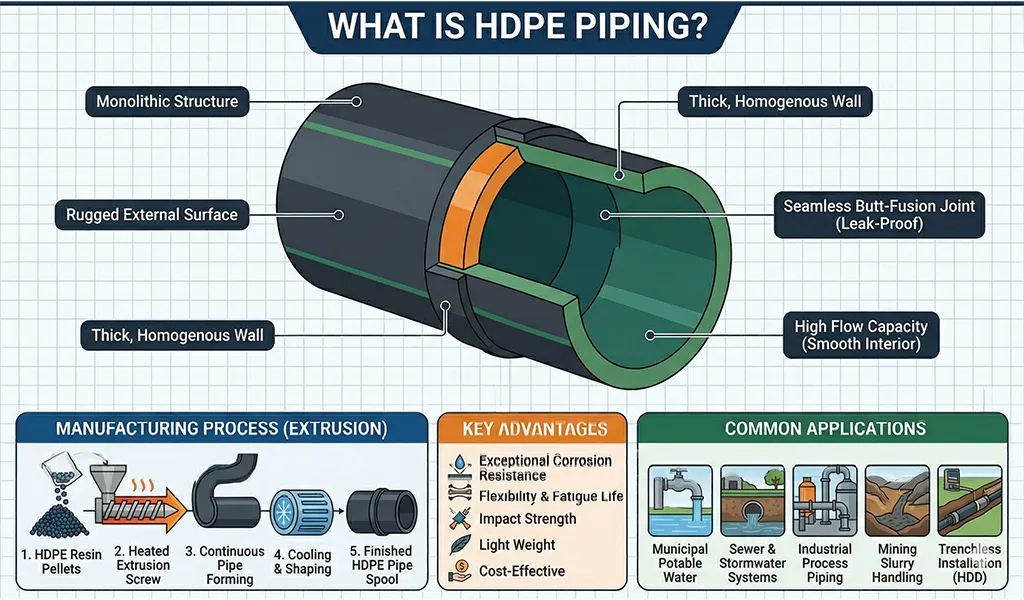
 HDPE Piping - (High-Density Polyethylene) is a highly durable, flexible thermoplastic pipe. Because of its incredible toughness, chemical resistance, and seamless joint capability, it has become the material of choice for demanding municipal, industrial, and trenchless applications.
Why use HDPE?
Unlike rigid pipes (like steel or PVC), HDPE's flexibility allows it to bend with shifting soils and be installed using advanced, non-disruptive methods.
- ✅ Flexibility: Can be bent to a radius 25 times the nominal pipe diameter, eliminating the need for many fittings.
- ✅ Fatigue Resistant: Exceptional resistance to water hammer and pressure surges.
- ✅ Continuous Lengths: Smaller diameters can be delivered in coils, reducing joint requirements.
- ✅ Zero Leaks: Heat-fused joints create a monolithic system with no gaskets to fail.
- ✅ Chemical Resistance: Does not rust, rot, pit, or corrode; highly resistant to scaling.
- ✅ Toughness: High impact resistance, even in sub-freezing temperatures.
The Butt Fusion Process
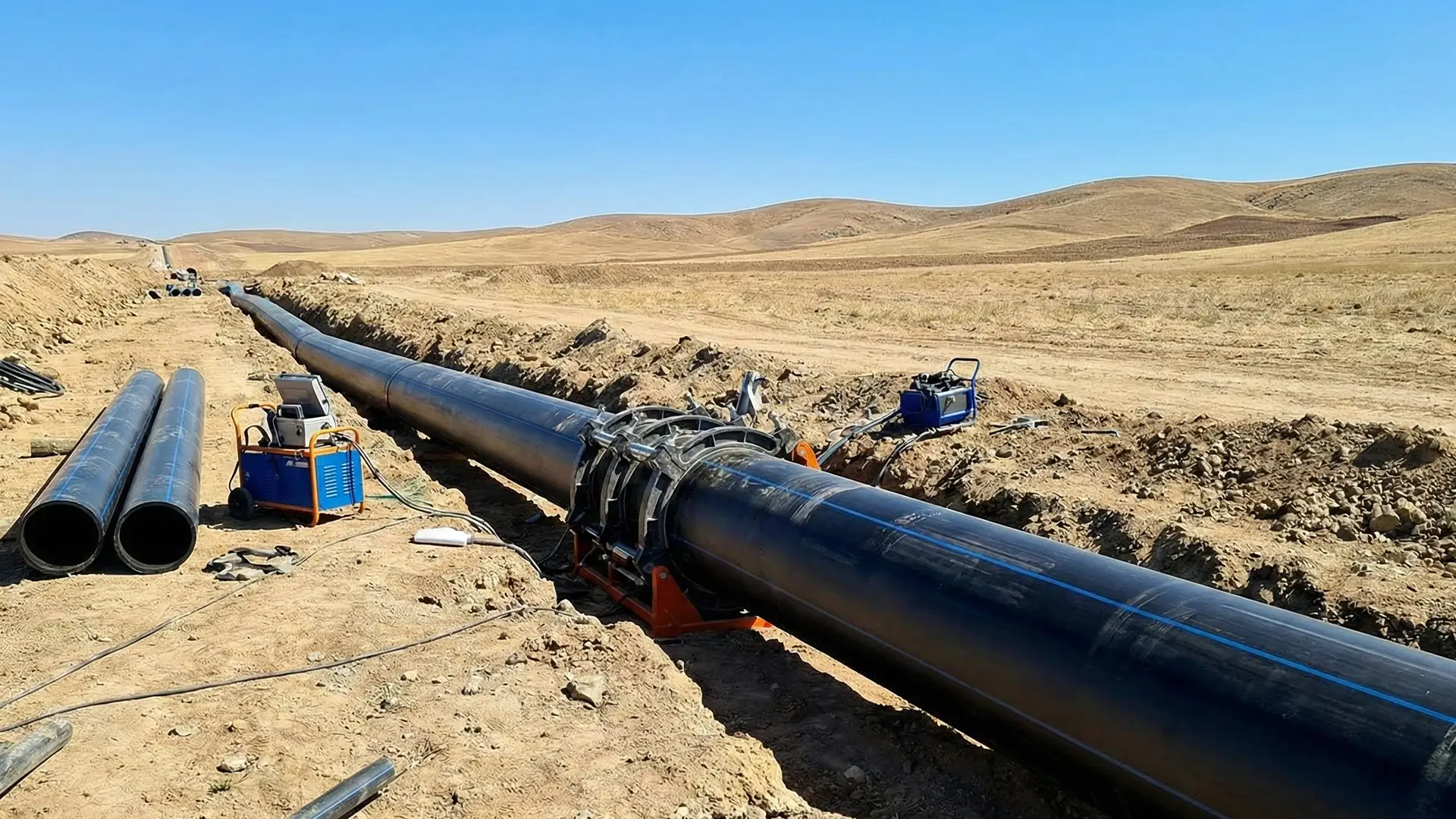
The most significant advantage of HDPE is how it is joined. Using a heat fusion process, the ends of two pipes are melted and pushed together under pressure.
This creates a permanent, leak-free joint that is actually stronger than the pipe itself. Because there are no bells or mechanical couplings, the pipe can be pulled through tight underground bores without snagging.
Common Applications
HDPE is the undisputed king of trenchless technology and harsh environment fluid transport.
Trenchless & Municipal
- Horizontal Directional Drilling (HDD)
- Pipe Bursting / Sliplining (Rehab)
- Water & Wastewater Mains
- Gas Distribution Networks
Industrial & Energy
- Mining (Slurry Lines & Dewatering)
- Oil & Gas Gathering
- Landfill Methane Extraction
- Geothermal Systems
Need HDPE or Steel Pipe?
Whether you are trenching or directional drilling, find the right distributors in our national supplier directory.
SOURCE PIPE
Connect with nationwide suppliers for PVC, HDPE, and Steel pipe products.
Find Distributors