
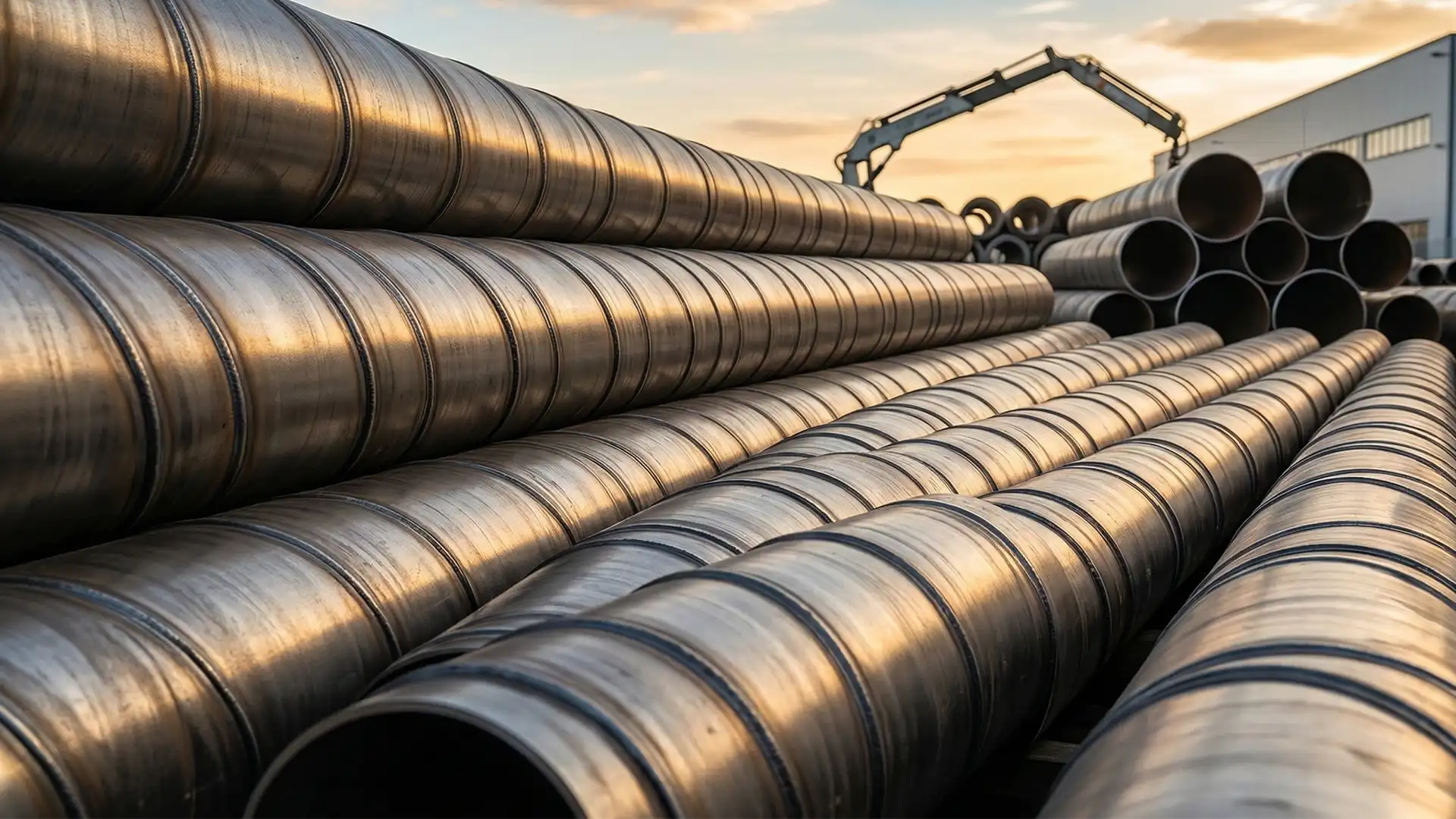
Understanding SSAW, HSAW, and LSAW
Before evaluating the benefits, it is important to distinguish between the three primary Submerged Arc Welding (SAW) methods used in large-diameter pipe manufacturing:
- SSAW / HSAW (Spiral or Helical): These terms are used interchangeably. The pipe is formed by winding a steel coil (hot rolled strip) into a helical shape. It is the gold standard for piling, caissons, and water transmission due to its high hoop strength and diameter versatility.
- LSAW (Longitudinal): Manufactured from individual steel plates. The plate is formed into a tube and welded along a single longitudinal seam. While more expensive to produce in large diameters, it is the preferred choice for high-pressure oil and gas transmission where straight-seam radiographic testing is required.
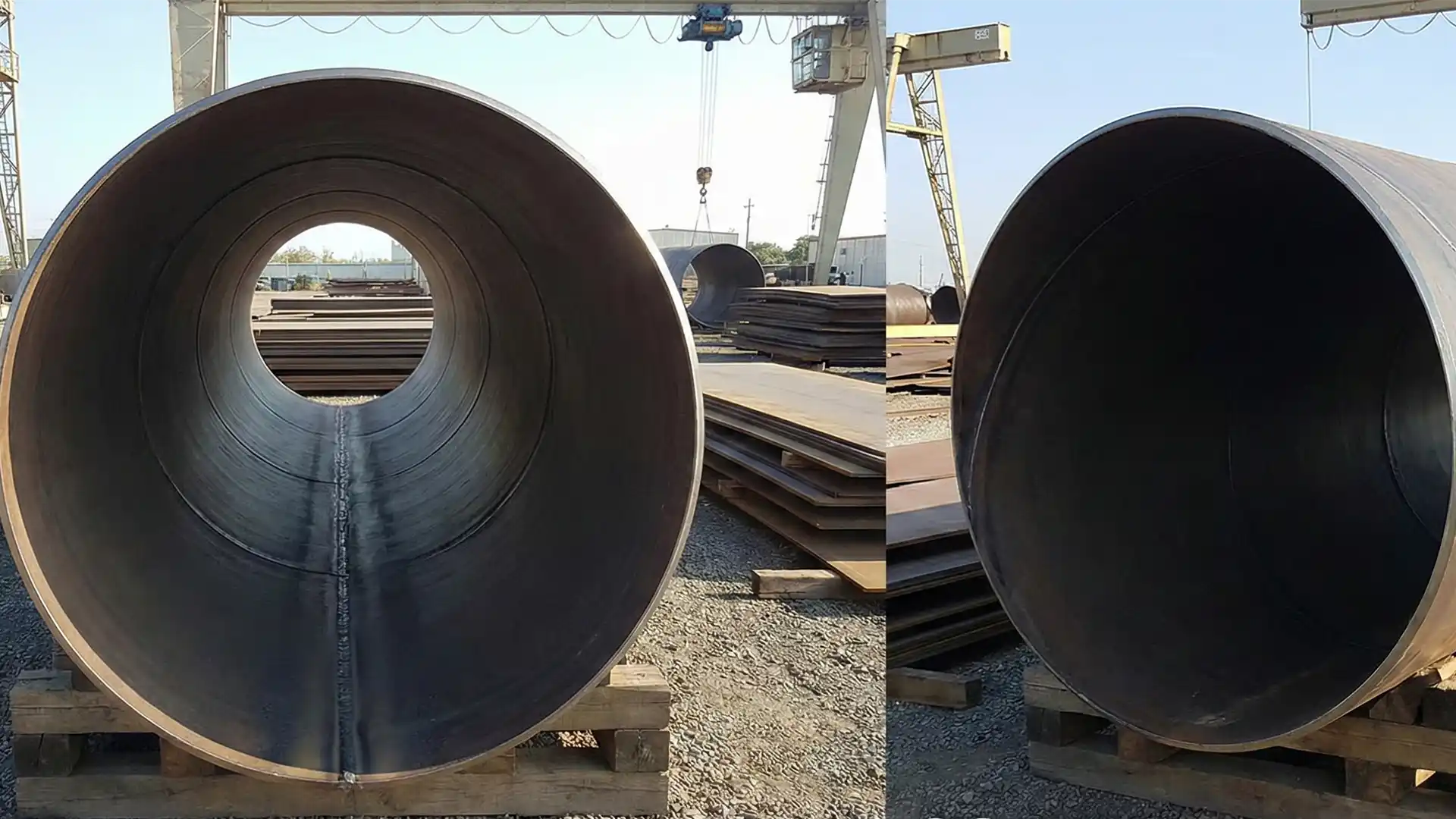
Spiral pipe, technically known as Spiral Submerged Arc Welded (SSAW) pipe, has become a cornerstone in heavy civil construction. Unlike standard longitudinal pipe which is limited by the width of the steel plate, spiral pipe is formed from continuous steel coils, allowing manufacturers to produce massive diameters and customizable lengths that straight-seam mills simply cannot match.
1. The SSAW Manufacturing Advantage
The unique properties of spiral pipe are a direct result of the SSAW manufacturing process. A continuous coil of steel strip (skelp) is uncoiled, leveled, and fed into a forming machine at an angle, rolling it into a cylinder. The edges are then simultaneously welded on the inside and outside using submerged arc technology.
- Exact Diameter Control: The pipe's outer diameter (OD) is determined by the angle at which the steel strip enters the forming rolls, not the width of the steel coil. This allows manufacturers to produce precise, custom diameters (e.g., 37.5" OD) without needing custom-sized flat plates.
- Unlimited Lengths: Because the pipe is formed continuously from a massive coil, it can be cut to any length required by the project. This is only limited by what can legally be transported on a flatbed truck or railcar.
- Exceptional Straightness: The continuous, rotating forming process naturally balances the stresses in the steel, resulting in excellent straightness and roundness, which is highly critical when driving pipe piles or aligning field splices.
2. Structural Efficiency & Strength
Because the weld seam is wound helically around the pipe, the seam actually acts as a continuous reinforcing band, fundamentally altering how the pipe handles stress compared to straight-seam LSAW or ERW pipe.
Higher Hoop Strength
The spiral seam provides greater resistance to external radial pressure. This makes it an ideal casing choice for road boring, where it must withstand the crushing, dynamic weight of highways and trains above.
Crack Resistance (Tortuosity)
If a stress crack develops in the steel, it will follow the path of least resistance. In straight-seam pipe, a crack can run the entire length of the joint. In SSAW pipe, the crack hits the angled weld seam and is forced to change direction, preventing catastrophic, long-running splits.
3. Project Cost Effectiveness
For large-scale infrastructure projects, the decision to use spiral pipe often comes down to the bottom line.
By ordering custom, extended lengths of spiral pipe directly from the mill, contractors can drastically reduce the number of field splices required on the job site. Fewer splices mean less time spent by highly-paid welding crews, faster installation times, and significantly lower overall project costs.
| Feature | Spiral Weld (SSAW) | Longitudinal Weld (LSAW) |
|---|---|---|
| Weld Seam | Helical (Spiral) | Straight Line |
| Hoop Strength | Higher (Seam reinforces wall) | Standard |
| Length Availability | Unlimited (Continuous) | Limited (Typ. 40-60 ft) |
| Diameter Sizing | Infinite Custom Sizes | Fixed Tooling Sizes |
Sourcing Material?
Need massive OD spiral pipe for a casing or piling project? Connect with master distributors in our network.
Find distributorsWeight Calculator
Spiral pipe is often ordered in exact, custom lengths. Calculate the total theoretical weight for your freight logistics here.
Calculate Weight